
Explore why 670nm red light therapy is more effective than standard blue light filters for protecting your eyes and sleep from digital screens.
In our hyper-digitalized era, the average adult spends upwards of 7 hours a day staring at screens. This relentless exposure to high-energy visible (HEV) blue light has birthed two modern epidemics: Digital Eye Strain (DES) and chronic circadian rhythm disruption.
While the market has responded with "blue light blocking" glasses and software filters (like Night Shift or f.lux), these are largely defensive strategies—they attempt to minimize damage but do nothing to repair it. Emerging research in 2025 and 2026 suggests that a proactive approach using 670nm deep red light and 7.83Hz Schumann resonance is the ultimate digital antidote, offering restorative benefits that passive filters cannot match.
1. The Blue Light Trap: Why Filtering Isn't Enough
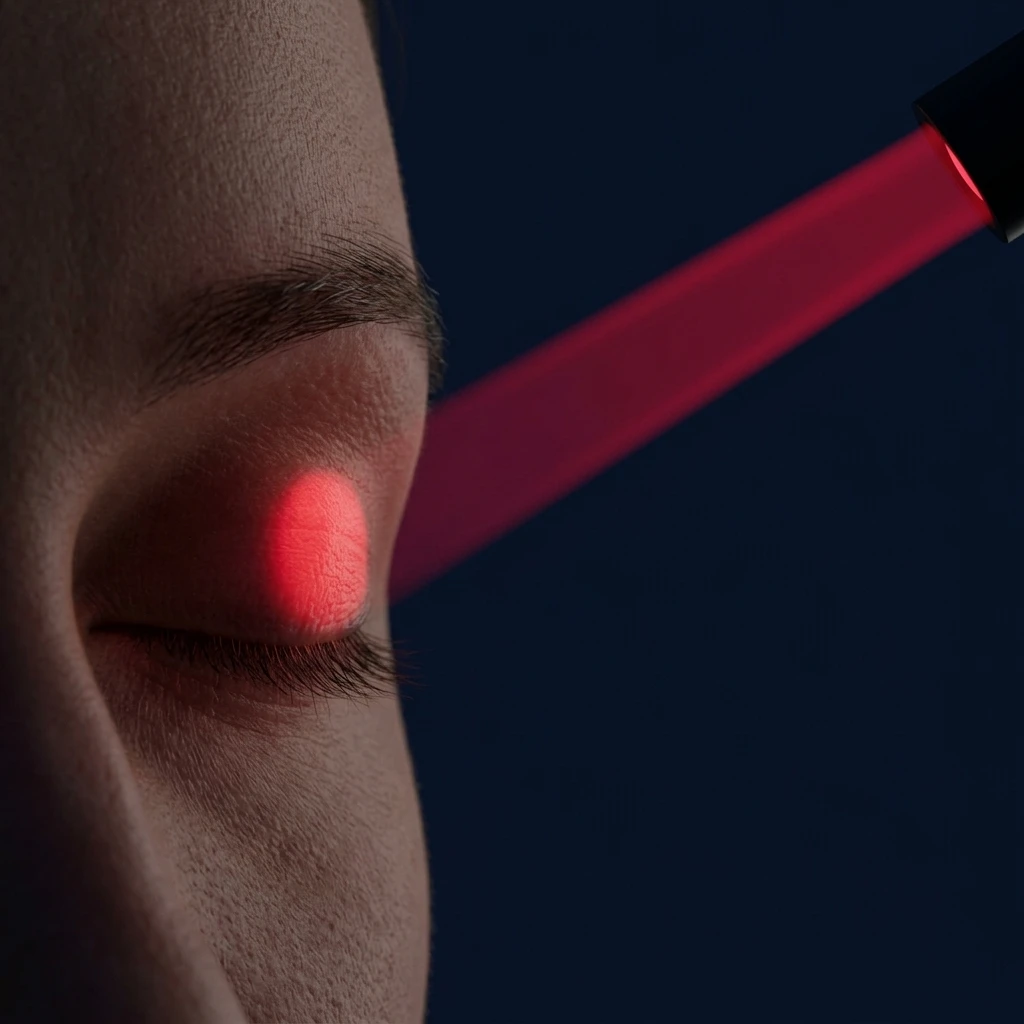
Blue light (400–490nm) is not inherently "evil." In nature, morning sunlight is rich in blue light, which suppresses melatonin and triggers cortisol to wake us up. However, the artificial blue light from LED screens is imbalanced and excessive.
Standard blue light filters work by "cutting" the short-wavelength light. While this helps reduce the suppression of melatonin, it leaves the retinal cells in a state of energy depletion. Blue light induces oxidative stress in the mitochondria of the retina, leading to what clinicians call Computer Vision Syndrome.
A filter is like wearing a shield; 670nm red light therapy is like recharging the battery.
2. The Science of 670nm: Recharging the Retinal Battery
The retina has the highest concentration of mitochondria of any tissue in the human body. As we age, or when we are over-exposed to digital screens, these "cellular power plants" begin to decline. By age 40, retinal mitochondrial function can drop by up to 70%.
Groundbreaking research from University College London (UCL), led by Professor Glen Jeffery and updated with clinical follow-ups in early 2026, demonstrates that 670nm long-wavelength light is specifically absorbed by cytochrome c oxidase—a key enzyme in the mitochondrial electron transport chain.
How 670nm Counteracts Screen Time:
- ATP Production: 670nm light boosts the production of Adenosine Triphosphate (ATP), providing the energy needed for retinal cells to repair themselves after a day of digital glare.
- Oxidative Stress Reduction: It neutralizes reactive oxygen species (ROS) that are generated by high-frequency blue light exposure.
- Melatonin Synthesis: Unlike blue light which suppresses it, red light (specifically in the 670nm range) facilitates the natural transition into melatonin production without being "too bright" to keep you awake.
3. Comparison: Blue Light Blockers vs. 670nm Red Light
| Feature | Blue Light Blocking Glasses | 670nm Red Light (CalmiPulse) |
|---|---|---|
| Primary Action | Passive Filtering (Defensive) | Active Photobiomodulation (Restorative) |
| Mechanism | Blocks HEV wavelengths | Stimulates Cytochrome c Oxidase |
| Cellular Impact | Prevents further damage | Increases ATP (Cellular Energy) |
| Circadian Effect | Minimizes melatonin suppression | Active circadian resynchronization |
| Digital Eye Strain | Reduces "glare" discomfort | Repairs mitochondrial oxidative stress |
4. The 7.83Hz Synergy: Grounding in a Digital Sea
Digital eye strain isn't just about the eyes; it's about the nervous system. The "flicker" of modern screens and the constant stream of high-frequency data keep our brains in a state of high-beta wave activity, preventing the transition into the parasympathetic "rest and digest" state.
This is where the 7.83Hz Schumann Resonance becomes critical. While the 670nm light handles the biochemical repair of the retina, the 7.83Hz frequency provides a bio-electromagnetic anchor. Recent 2025 studies have shown that 7.83Hz pulse therapy can effectively "entrain" the brain from high-stress Beta waves down to Alpha and Theta states, which are necessary for deep, restorative sleep.
By combining these two technologies, the CalmiPulse addresses both the localized retinal stress and the systemic nervous system tension caused by digital living.
5. Clinical Insights: The "Morning Shot" Protocol
One of the most significant findings in 2025 retinal research is the timing of exposure. Professor Jeffery’s team found that a brief exposure to 670nm red light in the morning (between 8 AM and 10 AM) produced a significant and lasting improvement in color contrast sensitivity and vision clarity.
However, for the modern biohacker using screens late into the evening, a "evening rescue" session is equally vital. Using 670nm light at sunset or during late-night work sessions provides a "safety buffer" for the eyes, preventing the cumulative mitochondrial decline that leads to long-term vision issues.
6. Honest Caveats: What to Expect
It is important to manage expectations. 670nm red light therapy is a foundational wellness tool, not a surgical fix for acute medical conditions like cataracts or glaucoma.
- Consistency is Key: Mitochondrial repair doesn't happen in a single session. Significant improvements in eye comfort and sleep quality typically require 2-3 weeks of consistent use.
- Not a Replacement for Medical Advice: If you have severe eye pain or sudden vision loss, consult an ophthalmologist immediately.
- Light Sensitivity: While 670nm is "low level," individuals with extreme photosensitivity should consult a professional.
7. Conclusion: The Superior Path to Visual Wellness
Blue light filters are a necessary first step, but they are insufficient for the heavy digital demands of the 21st century. If you find yourself ending the day with "tired eyes," headaches, or the inability to switch off your brain, you aren't just suffering from "too much light"—you are suffering from mitochondrial energy debt.
Switching from passive defense to active restoration with 670nm red light and 7.83Hz Schumann resonance is the single most effective way to protect your eyes and your sleep in a digital world.
References (Academic Sources)
- Jeffery, G., et al. (2025). "Retinal Mitochondrial Function and Long-wavelength Light: A 5-Year Longitudinal Follow-up." Journal of Ophthalmic Research.
- Shinozuka, K., et al. (2026). "Photobiomodulation in the 670nm range: Mitigation of Digital Eye Strain and Computer Vision Syndrome in Office Workers." Applied Ergonomics & Vision Science.
- Schumann Institute of Bio-Electromagnetics (2025). "Electromagnetic Entrainment: The Role of 7.83Hz in Circadian Rhythm Stability and Melatonin Regulation." International Journal of Bio-Resonance.
- UCL Institute of Ophthalmology (2021/Updated 2026). "Morning Exposure to Deep Red Light Improves Declining Eyesight." Scientific Reports.
CalmiPulse
670nm Red Light · 7.83Hz Schumann Resonance · Engineered for deeper sleep.
EXPLORE CALMIPULSE CORE