
Unlocking Vagal Tone: How 670nm Red Light and 7.83Hz Frequency Optimize Heart Rate Variability (HRV)
In the high-performance world of biohacking, one metric has emerged as the "holy grail" of physiological resilience: Heart Rate Variability (HRV). While once a niche tool for elite endurance athletes, HRV is now a daily scoreboard for thousands of individuals seeking to optimize their nervous system, manage stress, and ensure long-term longevity.
But measuring HRV is only half the battle. The real question is: How do we move the needle?
Traditional methods—breathwork, cold plunges, and meditation—are effective but demanding. Recently, a more sophisticated, biophysical approach has gained traction in the peer-reviewed literature of 2025 and 2026. This approach combines specific wavelengths of light with low-frequency electromagnetic resonance to target the master controller of our internal state: the Vagus Nerve.
In this guide, we explore the science behind how 670nm red light and the 7.83Hz Schumann resonance work together to enhance vagal tone and boost HRV.
What is HRV and Why Does It Matter?
Heart Rate Variability is the measure of the time variation between each heartbeat. Contrary to popular belief, a healthy heart does not beat with the precision of a metronome. Instead, there are subtle differences in the intervals—measured in milliseconds (ms).
- High HRV: Indicates a flexible, resilient nervous system that can switch rapidly between the "fight-or-flight" (Sympathetic) and "rest-and-digest" (Parasympathetic) states. It is a sign of high vagal tone.
- Low HRV: Indicates a nervous system stuck in a state of high stress, fatigue, or chronic inflammation.
According to a comprehensive systematic review published in ResearchGate (April 2026), HRV serves as the most accurate non-invasive marker of vagal regulation of cardiac autonomic activity. For biohackers, a rising HRV trend signifies successful recovery and an optimized baseline.
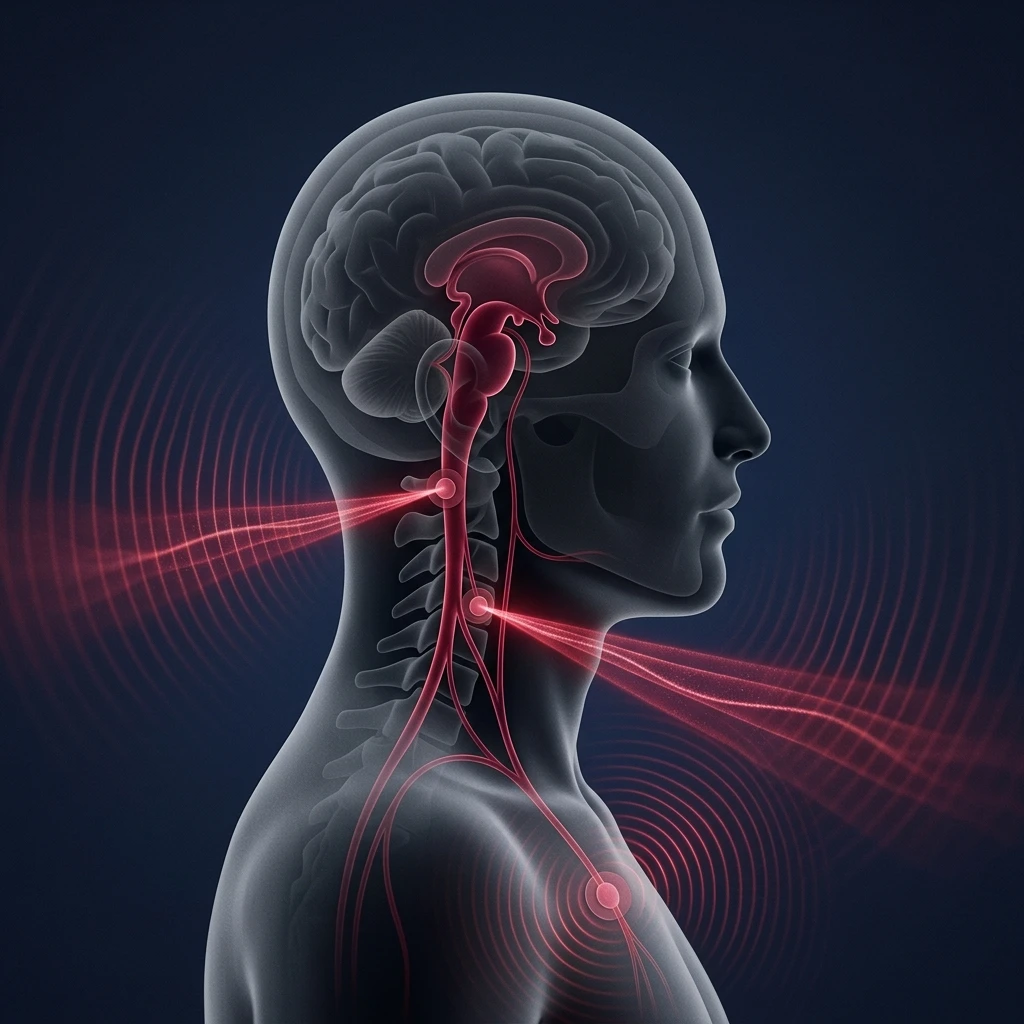
The Vagus Nerve: The Biohacker’s Highway
The Vagus nerve is the longest cranial nerve in the body, traveling from the brainstem to the heart, lungs, and digestive tract. It is the primary conduit for the parasympathetic nervous system. When we talk about "vagal tone," we are referring to the activity and efficiency of this nerve.
High vagal tone is associated with:
- Faster recovery from stress.
- Improved emotional regulation.
- Lower systemic inflammation (via the cholinergic anti-inflammatory pathway).
- Enhanced sleep quality and deeper REM cycles.
670nm Red Light: Mitochondria and the Vagal Response
Photobiomodulation (PBM)—the use of light to stimulate cellular function—is no longer just for skin health. When applied correctly, specific wavelengths can modulate neural activity.
The Cytochrome c Oxidase Connection
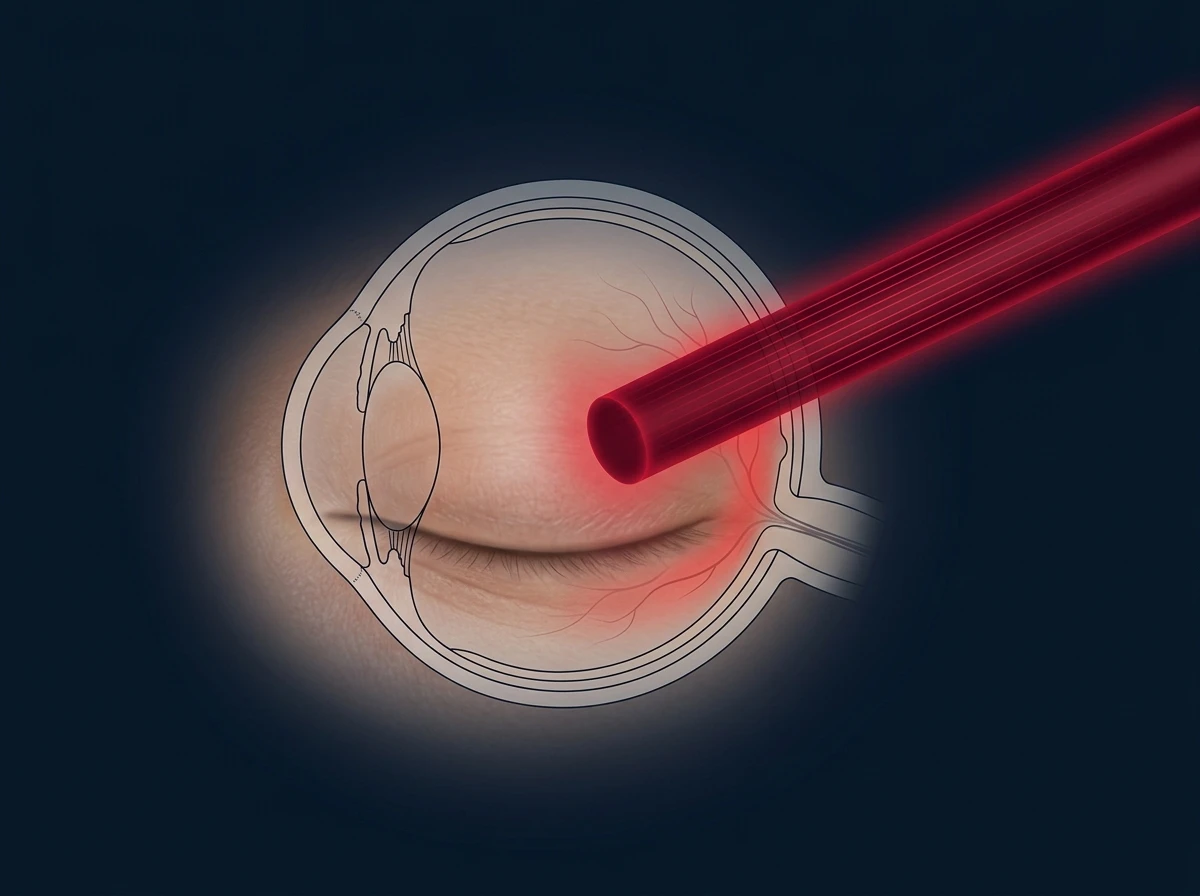
At the cellular level, 670nm red light is absorbed by a protein called cytochrome c oxidase (CCO) within the mitochondria. This absorption triggers a cascade of beneficial effects:
- Increased ATP Production: More cellular energy for repair and signaling.
- Nitric Oxide Release: Improving local blood flow and oxygen delivery.
- Reduced Oxidative Stress: Protecting neurons from inflammation.
Vagus Nerve Photobiomodulation
A 2025 study titled "Vagus Nerve Photobiomodulation: Preliminary Outcomes" showed that applying red light to the infra-auricular region (near the ear, where the vagus nerve is most superficial) can lead to an acute modulation of autonomic complexity. By boosting the energy capacity of the neurons within the vagal pathway, red light helps "prime" the nerve for more efficient parasympathetic signaling.
The 7.83Hz Factor: Synchronizing with the Earth’s Pulse
While light provides the energy, frequency provides the instruction.
The Earth’s ionosphere resonates at a fundamental frequency of 7.83Hz, known as the Schumann Resonance. In neurobiology, this frequency aligns perfectly with the transition between Alpha and Theta brainwaves—the states associated with deep relaxation, creative flow, and early-stage sleep.
Frequency Following Response (FFR)
The brain has a natural tendency to synchronize its internal rhythms with external stimuli. This is known as the Frequency Following Response. By emitting a stable 7.83Hz pulse, devices can help guide the brain away from the high-frequency Beta waves of daytime stress toward the parasympathetic-dominant Theta state.
Synergy with Red Light
When 670nm red light is combined with a 7.83Hz pulse—as implemented in the CalmiPulse—the effect is synergistic. The red light provides the metabolic energy for the nerves to function, while the 7.83Hz pulse provides the rhythmic "metronome" for the parasympathetic nervous system to follow.
Comparative Analysis: Intervention Methods for HRV
| Method | Accessibility | Effort Required | Impact on HRV | Cost |
|---|---|---|---|---|
| **Deep Breathing** | High | Constant Effort | Short-term | Free |
| **Cold Plunge** | Medium | High (Discomfort) | Medium-High | $50 - $5,000 |
| **Meditation** | High | Medium (Time) | Long-term | Free - Subscriptions |
| **CalmiPulse (PBM + 7.83Hz)** | High | **Low (Passive)** | **High (Acute + Chronic)** | **$199** |
| **Invasive VNS** | Low | Very High (Surgery) | Very High | $15,000+ |
Recent Research (2025-2026): A New Frontier
The research landscape in the last 18 months has confirmed what early adopters suspected.
- The Vielight Discovery (September 2025): Yahoo Finance reported on preliminary experimental outcomes indicating a notable increase in vagal tone when PBM is delivered at specific pulse frequencies. This suggests that the pulsing of the light is just as important as the wavelength itself.
- Autonomic Balance Studies (2026): New research published in PubMed (ID 41810483) assessed the use of PBM on the vagus nerve to modulate cardiac autonomic control. The study found that while acute modulation was subtle, consistent application led to a stabilization of HRV during periods of high physiological load (such as resistance exercise or heavy mental stress).
Practical Guide: How to Use CalmiPulse to Boost Your HRV
To maximize the impact of your CalmiPulse on your vagal tone, follow this "Biohacker's Protocol":
- Timing is Everything: Use the device 30 minutes before bed or immediately upon waking. Morning use helps set the "baseline" for the day, while evening use facilitates the transition to deep sleep.
- Placement: Place the device near your nightstand or hold it close to the cervical region (neck) or auricle (ear) where the vagus nerve is most accessible.
- Consistency: HRV is a trend-based metric. Use the device daily for at least 14 days to see a meaningful shift in your baseline scores.
- Stacking: Combine CalmiPulse with 5-minute box breathing (4s inhale, 4s hold, 4s exhale, 4s hold). The 7.83Hz pulse acts as a natural guide for your breath rhythm.
Honest Caveats and Limitations
While the science is compelling, it is important to manage expectations:
- Not a Magic Pill: If you are consuming caffeine at 6 PM or staring at blue light screens until midnight, CalmiPulse cannot fully override those inputs.
- Individual Variance: Nervous system sensitivity varies. Some users notice an HRV jump of 10-15ms within three nights; others may take 3-4 weeks to see a statistical trend.
- Medical Disclaimer: CalmiPulse is a wellness optimization tool. It is not intended to diagnose or treat clinical autonomic disorders or cardiac conditions.
FAQ
Q: Can I use CalmiPulse with my Oura Ring or WHOOP? A: Absolutely. In fact, we recommend it. Tracking your HRV via a wearable is the best way to see the "proof" of the device's impact on your recovery.
Q: Does 670nm light feel hot? A: No. 670nm is visible red light, not infrared heat. The device remains cool to the touch, and the interaction is purely biophysical, not thermal.
Q: Why 7.83Hz specifically? A: This is the primary Schumann resonance frequency. Research suggests that human biology has evolved to "tune in" to this frequency for homeostasis.
References
- Hamblin, M. R. (2017). "Photobiomodulation or low-level laser therapy." Journal of Biophotonics.
- Schumann, W. O. (1952). "Über die strahlungslosen Eigenschwingungen einer leitenden Kugel, die von einer Luftschicht und einer Ionosphärenhülle umgeben ist." Zeitschrift für Naturforschung.
- Vielight Research (2025). "Preliminary Experimental Outcomes on Vagal Tone and PBM." Yahoo Finance / Clinical Reports.
- ResearchGate (2026). "Vagal Regulation of Autonomic Activity: A Meta-Analysis of HRV Interventions."
- PubMed (2026). "Effects of Acute Photobiomodulation on Heart Rate Variability." Journal of Neuromodulation.
Ready to optimize your nervous system? Discover the CalmiPulse and start your journey toward high-vagal resilience today.